If you're monitoring your IT monitoring tool, something's wrong.


| Checkmk | SolarWinds Observability | |
|---|---|---|
| Pricing model | Per service - 1 tier | ... |
| ... | ... | . |
| ... | ... | ... |
| . | ... | ... |

Zero-Touch Scaling
Configuration is hierarchical. New assets automatically inherit monitoring policies based on rules/tags/folders. Zero manual touch for seamless scaling.
Manual Mapping
Configuration is tied to the individual "Entity." Requires manual mapping and wizard-steps as the environment grows.
Unified Monitoring Logic
Checkmk's monitoring model is built around consistent and unified definitions of hosts and services. You get full visibility in one place without context-switching.
Siloed Modular Suite
Built as a collection of specialized "Explorers" (Logs, APM, Infra). Correlation often requires jumping between separate data silos.
Vendor-Agnostic
Built on open-source heritage with native, deep support for OpenTelemetry, Prometheus, and SNMP. It treats open standards as first-class citizens, ensuring your data remains portable.
Platform-Centric Model
While supporting open standards like OTel, the architecture still prioritizes a proprietary data model and specific agents to unlock core features.
Meaningful Defaults & Rapid Troubleshooting
Automated discovery applies host-specific thresholds for immediate visibility. Paired with AI-assisted root cause analysis, this turns quickly infrastructure noise into actionable insights.
Observation-Based Manual Setup
A high-touch process requiring a calibration period to establish baselines. Demands manual oversight during onboarding, prioritizing long-term data collection over rapid deployment.
Predictable Pricing
Costs scale on a transparent curve based on monitored services/devices, making forecasting straightforward.
Complex and Fragmented Pricing
Pricing is more complex to forecast, requiring assumptions for data ingestion, host counts, and feature modules.
Automated Host Lifecycle
Monitoring coverage is dynamic; the system automatically adds, updates, and retires hosts in sync with your infrastructure. No "stale" configurations.
High-Touch Upkeep
Requires manual actions and active taxonomy management. As the environment changes, the admin must manually intervene to keep the data relevant.










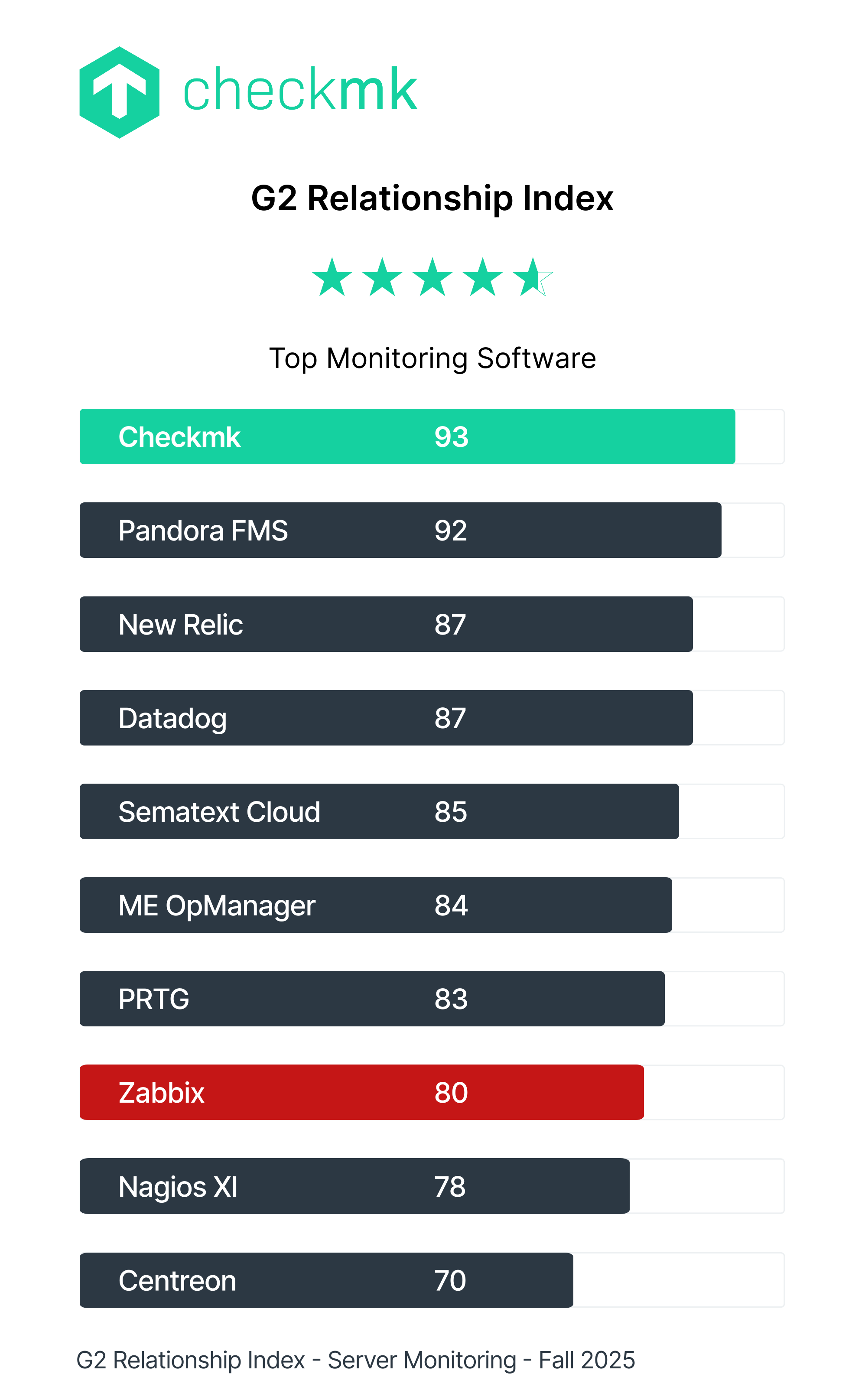





Checkmk is initially easy to set up and later powerful to use. There are tons of possibilities to enhance and optimize the tool to fit your needs.
Rasmus P. Senior System Analyst

A leading IT infrastructure monitoring system which helps your business easily manage servers, keep track of your applications and monitor cloud infrastructure.
Sarah J. Management Consultant
Checkmk has very well-organized and easy-to-follow dashboards that display real-time data from various IT infrastructure. It’s transformed our business operations.
Jade J. Operational Risk Consultant
A low-cost and extremely well-performing monitoring tool with good support from both the developers and the product community as well.
Peter L. Principal System Engineer
I sleep well knowing that if there is an issue, Checkmk will find it before users start complaining. Compared to other IT monitoring solutions, Checkmk is the most efficient platform.
George P. Lead Technical Support Engineer
Checkmk Cloud uses a transparent, service-based model that scales linearly. SolarWinds Observability is modular, meaning every new capability adds a fresh layer of cost.
Checkmk Cloud |
Solarwidns Observability |
|---|---|
| Transparent service-based subscription. | Costs are calculated across multiple modular SKUs based on specific feature sets and entities. |
| Simple forecasting. Scaled by number of services. | Cost forecasting requires multiple assumptions across modules. |
| Standardized checks and rule-based scaling reduce admin overhead. | Per-entity instrumentation increases IT workload. |
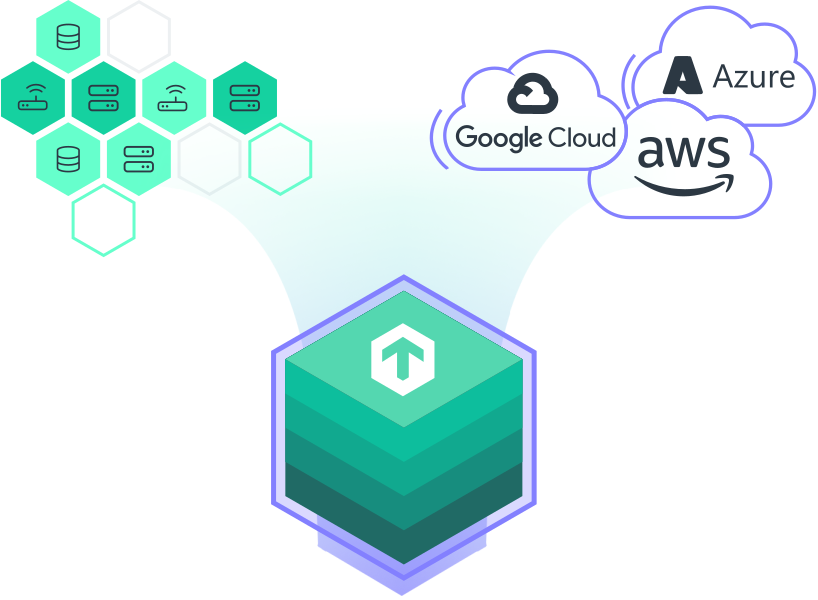
Checkmk Checkmk Cloud is designed for teams that run hybrid IT, who:
- Operate Hybrid:
Manage complex cloud and on-premises infrastructure from a single pane of glass.
- Demand Broad and Deep Visibility:
Require full-stack insights, from serverless functions to physical hardware.
- Seek Simplicity:
Unify monitoring of servers, network devices, and containers into one platform—with predictable costs.
- Prioritize Security:
Require regional data residency and encrypted, outbound-only connections to maintain the privacy and stability of the internal network.
Checkmk Cloud vs other competitors
Evaluating other alternatives? See how Checkmk Cloud compares across the monitoring landscape:
Checkmk Cloud vs LogicMonitor Compare hybrid monitoring approaches, cloud-native features, and pricing models
Checkmk Cloud vs Datadog Compare an integrated platform approach with specialized cloud-native features and usage-based models
The full feature set is ready when you are.
Or talk to our team to see if Checkmk Cloud fits your environment.
Note: competitive comparisons presented on this page are based on publicly available information, user reviews, and product documentation as of May 2026.