Checkmk: A top-rated SolarWinds alternative
Modern infrastructure visibility requires a unified approach rather than a multi-layered architecture. Checkmk unifies your hybrid IT monitoring strategy, bringing traditional networks, enterprise hardware, and cloud-native containerized workloads together under a streamlined architecture.




Prefer to look around? Get demo access in seconds.
Access DemoThe structural deep-dive comparison
Compare the structural and operational differences between self-hosted deployments of SolarWinds and Checkmk:
Checkmk (Self-Hosted) |
SolarWinds (Self-Hosted) |
|---|---|
| Platform Architecture | |
| Unified core framework; comprehensive monitoring in a single platform. | Inherently modular framework; scales via tier-based node allocation. |
| Backend Requirements | |
| Deploys via standard Linux packages, Docker containers, or as a turnkey Virtual Appliance. | Requires dedicated Windows Server instances and a full MS SQL Server database. |
| Remote Site Deployment | |
| Centralized management via Remote Sites; Checkmk Ultimate includes lightweight Checkmk Relays. | Relies on Additional Polling Engines (APEs) with extra OS/DB costs. |
| Configuration Workflow | |
| Centralized, rule-based configuration with automated topology and dependency discovery. | Requires manual dependency mapping and extensive custom property tuning. |
| Metric Efficiency | |
| Built for high density; Checkmk Micro Core ensures minimal CPU/RAM footprint. | Scalability limited by relational database (MS SQL) write speeds. |
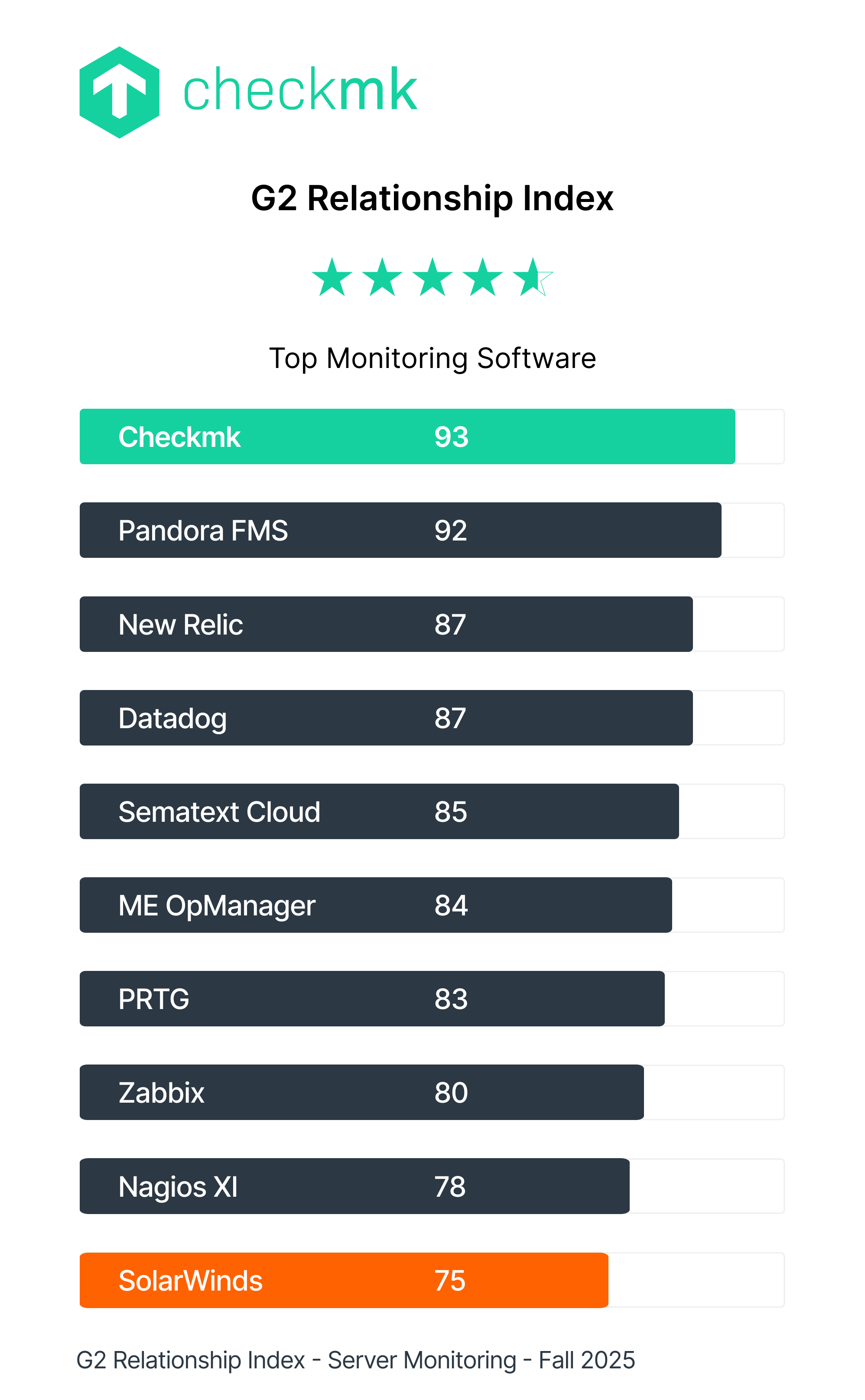





Checkmk is trusted by industry leaders worldwide










Checkmk is initially easy to set up and later powerful to use. There are tons of possibilities to enhance and optimize the tool to fit your needs.
Rasmus P., Senior System Analyst

A leading IT infrastructure monitoring system which helps your business easily manage servers, keep track of your applications and monitor cloud infrastructure.
Sarah J., Management Consultant
Checkmk has very well-organized and easy-to-follow dashboards that display real-time data from various IT infrastructure. It’s transformed our business operations.
Jade J., Operational Risk Consultant
A low-cost and extremely well-performing monitoring tool with good support from both the developers and the product community as well.
Peter L., Principal System Engineer
I sleep well knowing that if there is an issue, Checkmk will find it before users start complaining. Compared to other IT monitoring solutions, Checkmk is the most efficient platform.
George P., Lead Technical Support Engineer
Why enterprise IT teams transition to Checkmk
1. Unified hybrid IT observability
Checkmk monitors networks, servers, databases, containers, and hypervisors simultaneously. Over 2,000 built-in integrations are included natively, removing the need to procure costly add-on modules to gain visibility into your storage arrays or cloud endpoints.
2. Reduction in hardware overhead
SolarWinds scales by adding hardware resources and separate database servers. Built natively for Linux and containers, Checkmk operates with low CPU and RAM footprint, maximizing data center resource efficiency.
3. Automation of configuration and discovery
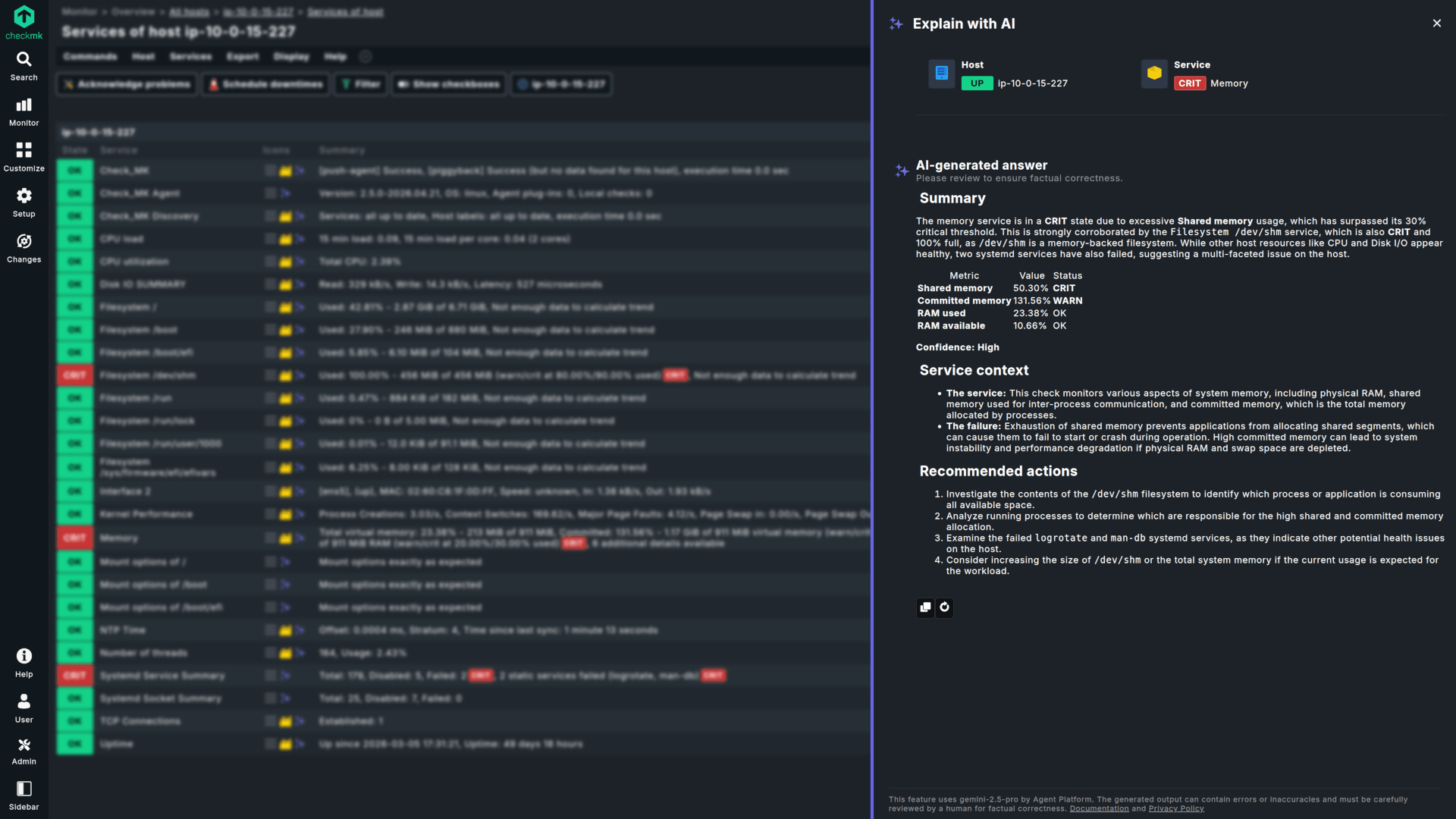
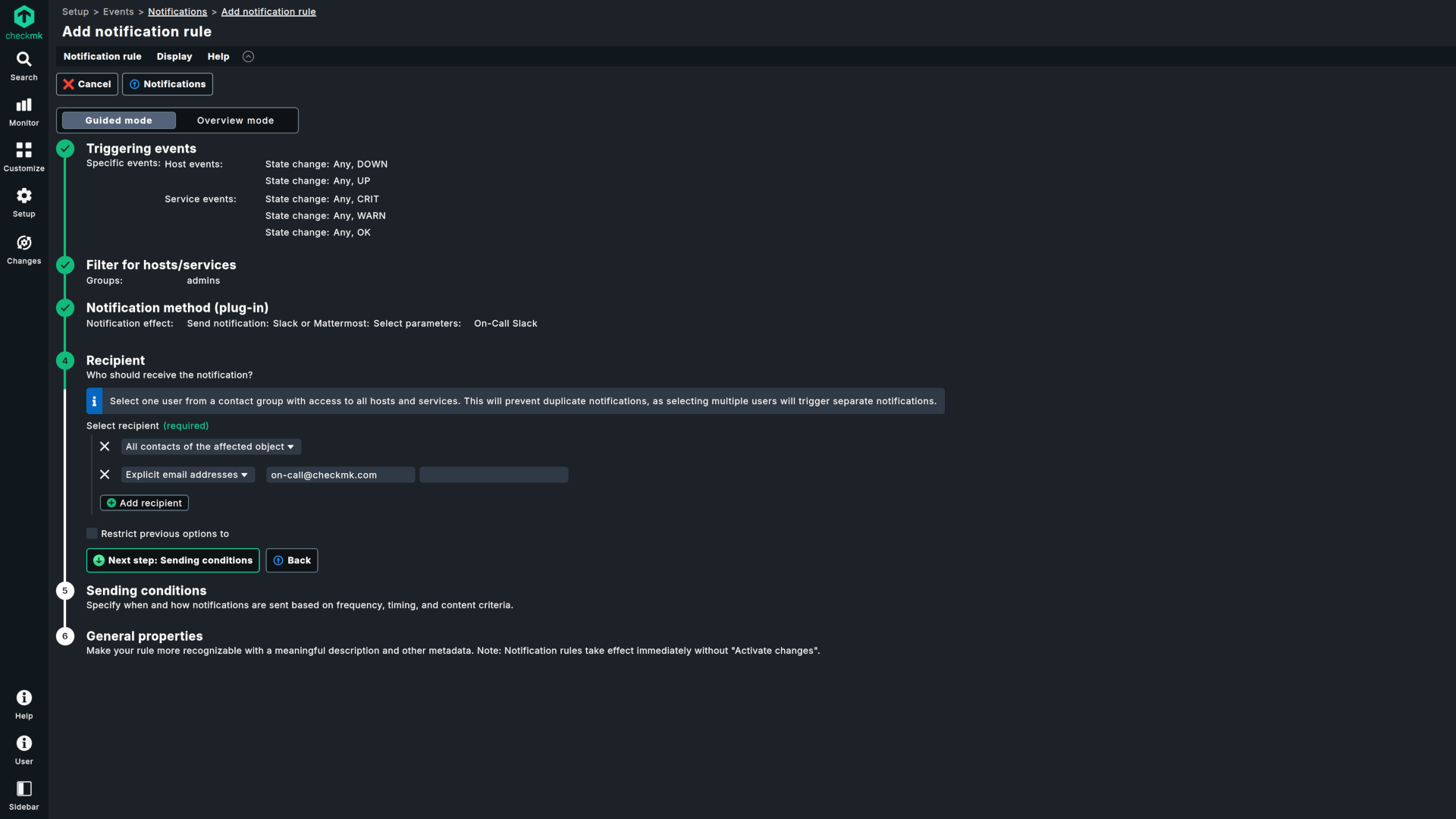
Instead of managing discovery profiles and static templates, Checkmk utilizes a rule-based approach combined with automated discovery to dynamically detect infrastructure updates and enforce granular monitoring profiles.
Structured migration without sacrificing control
Built by system architects who understand granular data. Your migration process is rapid and structured.
Deploy your hub
Deploy via Docker containers, turnkey Virtual Appliances, or native Linux packages. Get the core server running quickly with minimal effort.
Automate discovery
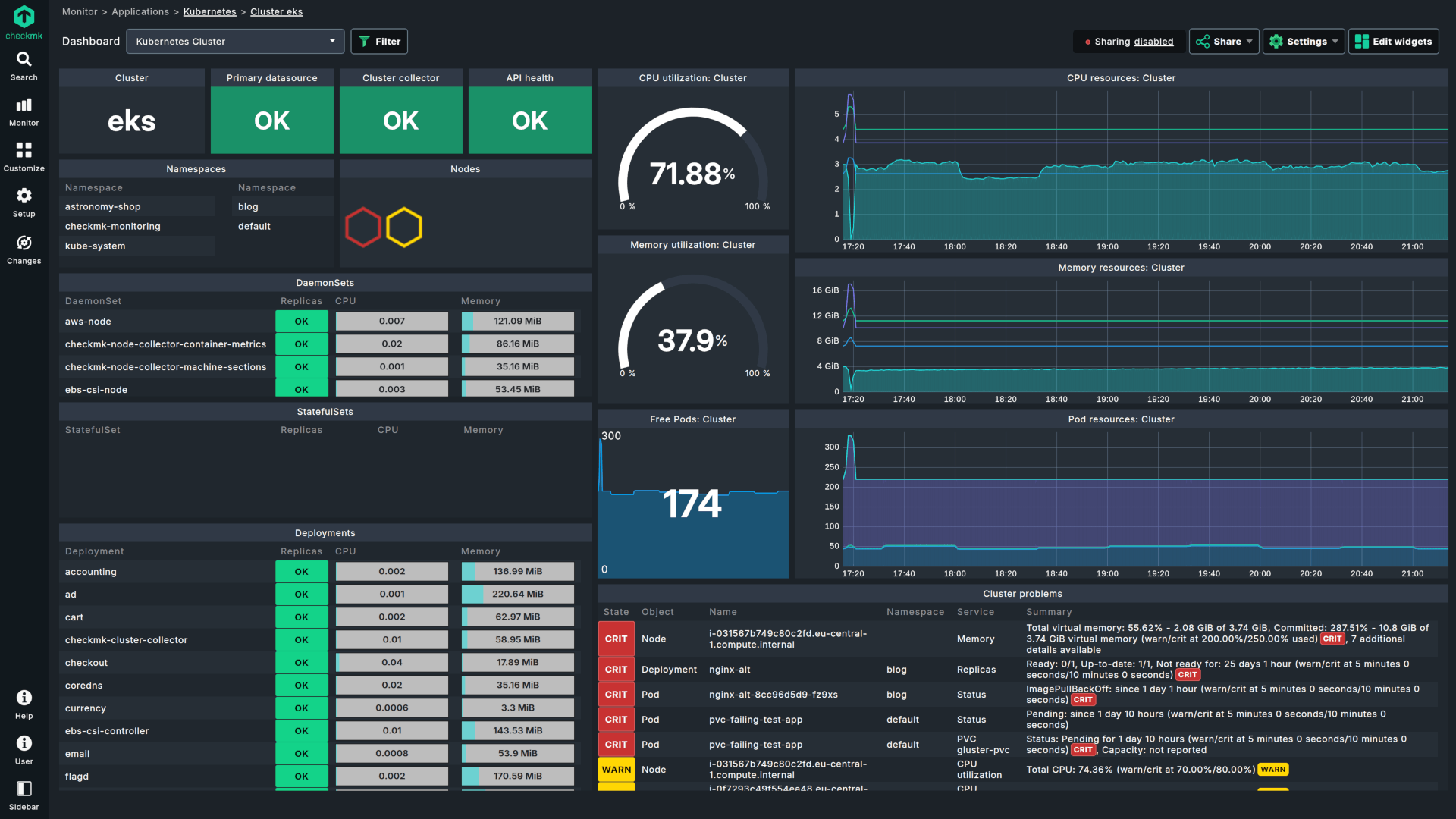
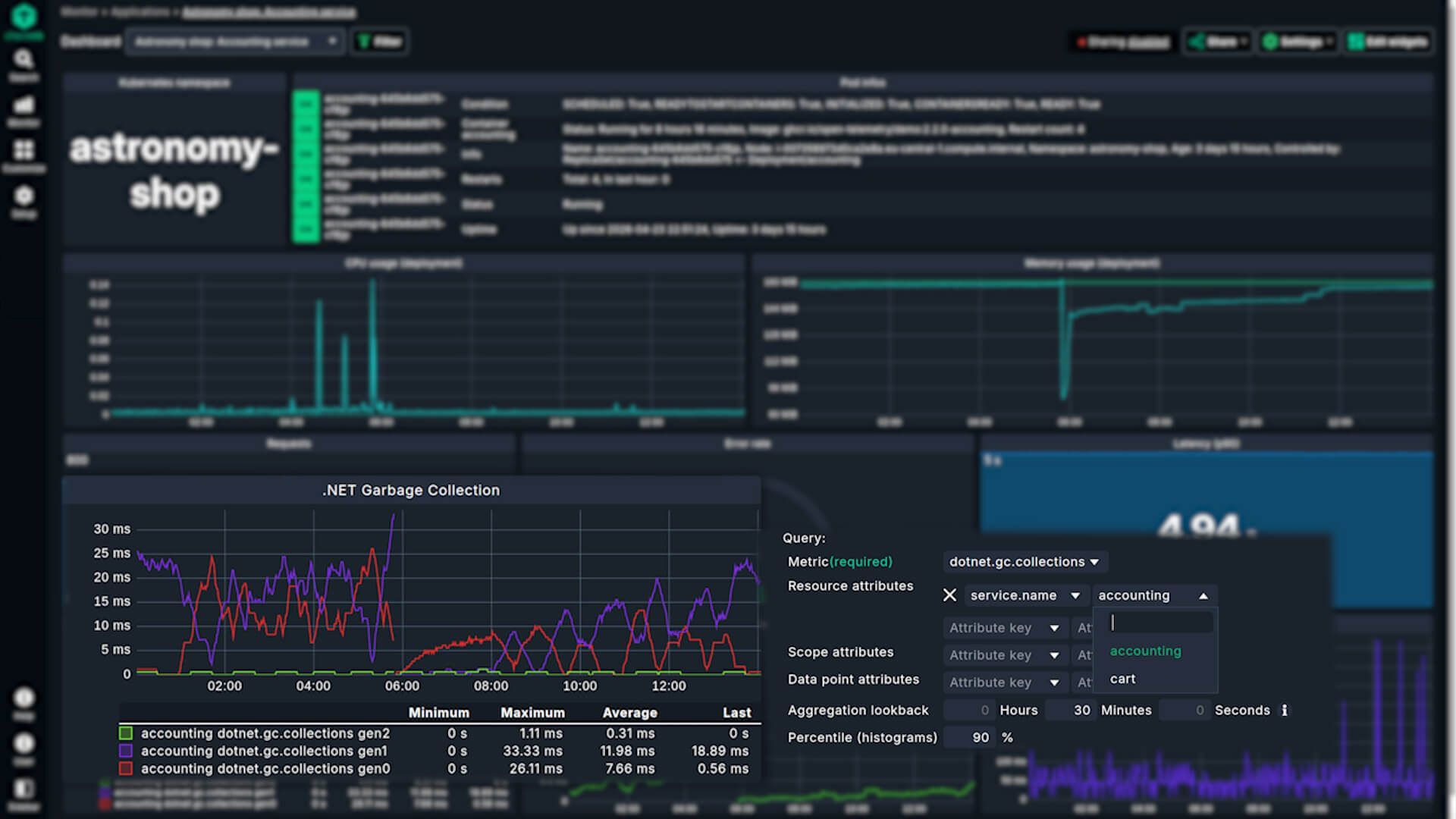
Automatically discover operating systems, network topologies, and storage. Map Proxmox or Kubernetes using built-in special agents and cluster collectors.
Unify your view
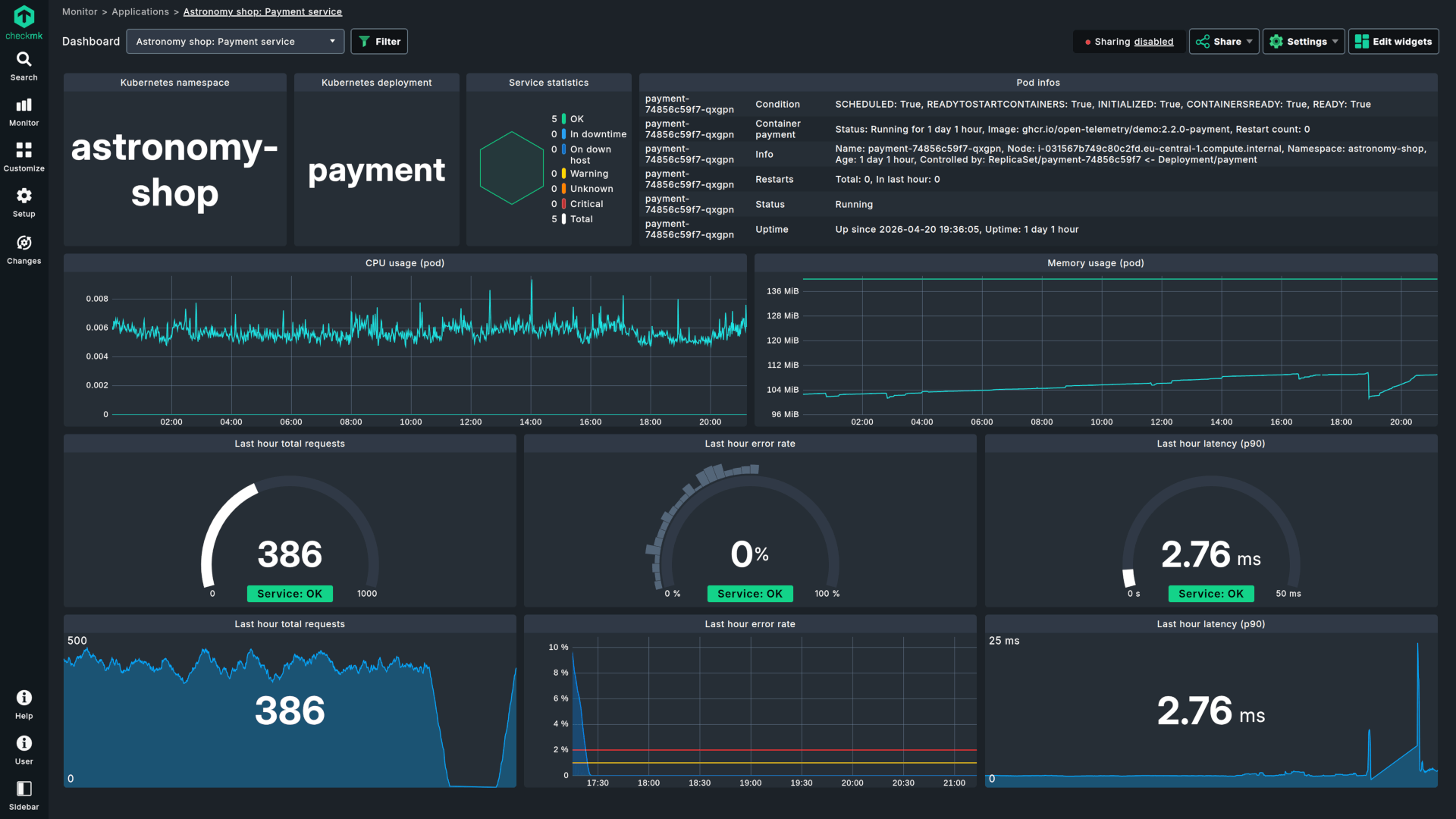
Analyze cloud-native microservices side by side with traditional infrastructure data in a single platform.
Empower teams
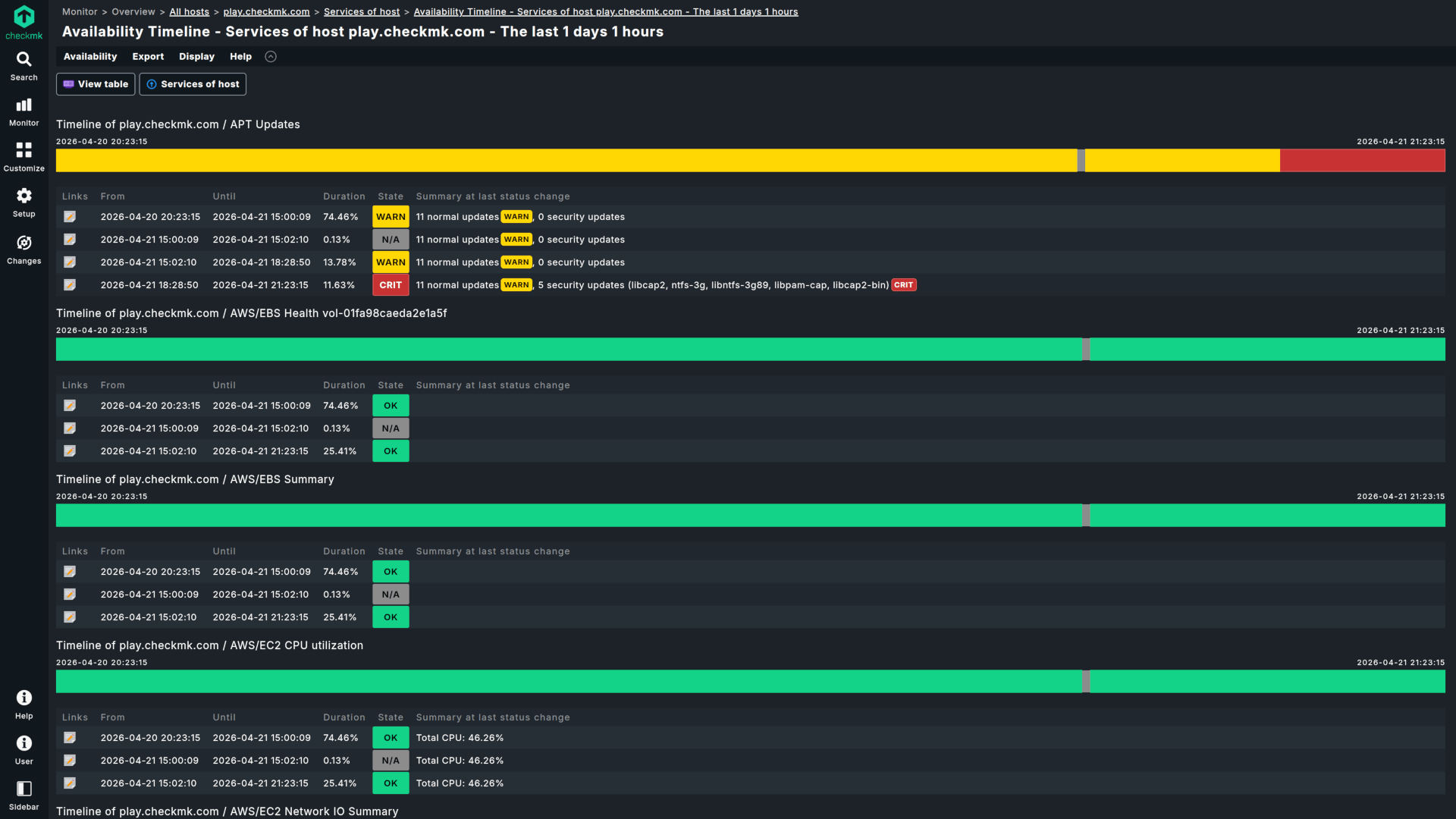
Deliver clean dashboards that filter out alert noise, helping teams focus on data relevant to their operations.
Built for scale. Automated for efficiency.
Checkmk vs other competitors
Evaluating other alternatives? See how Checkmk compares across the monitoring landscape:
Checkmk vs Zabbix
Compare a native, rule-based setup with a template architecture to see how they differ in automation and maintenance overhead.
Checkmk vs PRTG
Compare host-based and sensor-based licensing models, alongside the architectural differences in resource efficiency.
Checkmk vs Nagios
Compare traditional open-source foundations with scalable enterprise automation and modern observability.
Frequently asked questions
SolarWinds relies on a Windows Server framework paired with a relational Microsoft SQL Server backend that writes all performance metrics via transactional database queries. Checkmk commercial editions run on a proprietary, C-based Micro Core that utilizes optimized Round Robin Databases (RRD) for historical metrics. This architectural approach reduces the CPU and RAM footprint compared to traditional relational database storage.
No. While the SolarWinds Platform (formerly Orion) has transitioned from standalone modules to SolarWinds Observability Self-Hosted tiers, its node-based allocation varies depending on the monitored workload type. Conversely, Checkmk delivers complete hybrid IT visibility out-of-the-box. A single license includes over 2,000 native integrations for networks, hardware, applications, and containers, without requiring separate database prerequisites or variable node calculations.
SolarWinds scales remote monitoring via Additional Polling Engines (APEs), which run on their own Windows Server instances, add load to the central SQL Server database, require an Enterprise-tier license, and carry their own software-update lifecycle. Checkmk relies on autonomous Remote Sites that utilize a self-contained data store, removing the need for external database management or separate OS licensing. Furthermore, for highly segmented networks, Checkmk Ultimate and Checkmk Cloud introduce Checkmk Relays—lightweight containers that establish secure outbound mTLS connections with zero inbound firewall rules required.
Yes. Available in Checkmk Ultimate and Checkmk Cloud, the platform features native OpenTelemetry (OTel) metric ingestion via OTLP. This allows enterprise teams to cross-analyze application performance data against underlying hardware bottlenecks. By utilizing built-in dashboards for RED signals (Rate, Errors, Duration) side-by-side with traditional server and network metrics, system architects can accelerate root-cause analysis.
Not always. A Windows-centric team already standardized on the Microsoft stack, and comfortable with the licensing, may value SolarWinds' tight integration with that ecosystem. Checkmk's edge is a Linux and container-native architecture with a smaller resource footprint and no MS SQL dependency, so it fits best when you want to avoid a Windows plus SQL Server backend and keep scaling costs predictable. For a small, all-Microsoft environment, SolarWinds can be a reasonable fit.
You can start testing immediately by filling out the form above. The trial includes 100% of our enterprise capabilities out of the box for 30 days.
Checkmk offers several flexible deployment options to fit your specific infrastructure needs:
- Linux Server Installation
The most common deployment method. You can install Checkmk directly on a Linux server, whether physical or virtual. Supported Linux distributions include Red Hat Enterprise Linux (RHEL) based systems, SUSE Linux Enterprise Server (SLES), Debian, and Ubuntu. - Cloud Infrastructure
Host your own Checkmk instance on AWS or Microsoft Azure. For the fastest setup, Checkmk Ultimate is available as pre-configured virtual machine images in the AWS and Azure Marketplaces, allowing you to bypass manual installation steps. - SaaS (Software as a Service)
Enjoy hassle-free setup and maintenance-free experience with Checkmk Cloud. Learn more about our SaaS platform. - Docker Containers
Checkmk can be deployed as a Docker container using official images for both Community and commercial editions. The lightweight, self-contained container environment allows for easy deployment and portability. View Docker documentation. - Virtual Appliance
A ready-to-use solution for hypervisors like VMware ESXi, Hyper-V, Proxmox, or VirtualBox. The appliance includes a hardened Debian-based OS and a dedicated web interface for easy, command-free configuration and management. Check virtual appliance details. - Physical Appliance
For a turnkey hardware solution, Checkmk offers physical appliances with pre-installed and optimized software, ready for deployment in data centers. These appliances support high-availability clustering and come in various models with different maintenance levels to ensure 24/7 monitoring uptime. See available devices.
Your environment stays intact. You can choose to transition seamlessly to a commercial tier or downscale to our free editions without losing configuration data.
You can purchase a Checkmk license online or by requesting a quote from our sales team. Once you have your subscription, you simply enter your license credentials directly into your existing trial site.
The Checkmk server is not supported on Windows. However, you can monitor Windows hosts using the Checkmk agent. For the server itself, we suggest starting a Checkmk Cloud trial — our SaaS edition that runs entirely on our cloud infrastructure.
The easiest way to get started with a PoC is to start a trial, create a new site, and use the 30-day trial period. If you need more than 30 days to build your PoC, please contact our sales team, and we will be happy to issue an extended PoC license.
By using one of the self-hosted Checkmk editions you are in control of your monitoring data, which never leaves your infrastructure. The data for processing your account and subscription is securely stored and processed exclusively within the European Union. With Checkmk Cloud, you can choose where to keep all your data between the US (Virginia) and the EU (Frankfurt). In the latter case, your sensitive information never leaves EU borders.
Yes, Checkmk ensures full compliance with GDPR and other stringent EU regulations. Our security and data-processing practices are documented and designed to safeguard your data. You can read more on how we process data on the Privacy Policy page.
Discover why enterprise infrastructure teams trust Checkmk to scale their networks, servers, applications and modern container workloads from a single, unified core.
Note: competitive comparisons presented on this page are based on publicly available information, user reviews, and product documentation as of July 2026.