The state of AI in IT operations: Adoption is growing, trust is lagging
 on Aug 17, 2026
Artificial intelligence is often pitched as the answer to rising IT complexity. Checkmk's IT Tooling in Transition survey of 262 IT professionals across more than 35 countries suggests otherwise: AI is steadily entering day-to-day operations, but adoption stays cautious, inconsistent, and far from strategic. Meanwhile, the fundamentals (monitoring, automation, and cloud-versus-on-premises decisions) are becoming more important, not less.
Here's where IT teams really stand on AI, and what it means for monitoring
TL; DR
- AI has reached the mainstream: 89% of organizations are already using it in some form.
- Only 12% have adopted AI strategically across the business.
- The biggest barrier isn't the technology — it's trust. Accuracy and data privacy remain the top concerns.
- IT teams see AI's greatest potential in monitoring, especially for anomaly detection and automated log analysis.
- Despite the AI boom, monitoring remains the single most important IT discipline, ranking ahead of cloud platforms and automation.
Proven technologies still matter most
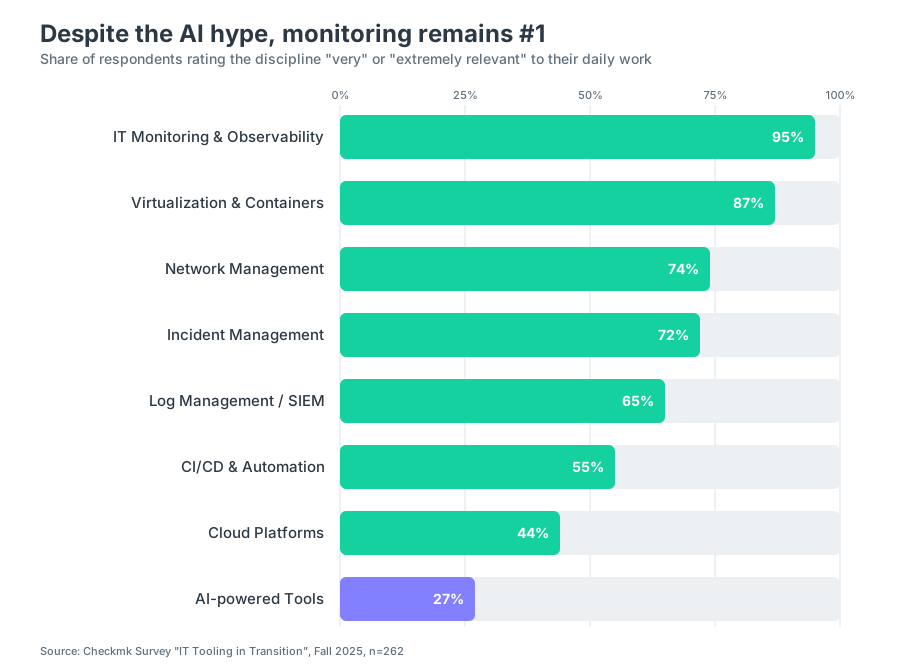
Despite years of AI hype, AI-powered tools still play only a minor role in everyday IT operations. Just 27% of respondents consider them relevant today, placing AI at the bottom of the list.
Monitoring and observability remain the clear priorities, with 95% of respondents identifying them as relevant. They are followed by virtualization and containerization (87%), network management (74%), and incident management (72%).
Log management and SIEM rank highly as well, with 65% of respondents considering them relevant. CI/CD and automation tools follow at 55% — both well ahead of cloud platforms at 44%.
Cloud, in fact, is losing momentum. Compared with our 2023 survey, its perceived relevance has dropped by 10 percentage points, suggesting organizations are moving beyond the "cloud-first" mindset toward a more balanced approach.
That shift becomes even clearer when respondents were asked how they would design their infrastructure today. Nearly three-quarters (73%) favor a hybrid architecture. Support for cloud-only environments has fallen sharply — from 55% in 2023 to just 21% today. Meanwhile, more than half (53%) now prefer primarily on-premises infrastructure supplemented by selective cloud services.
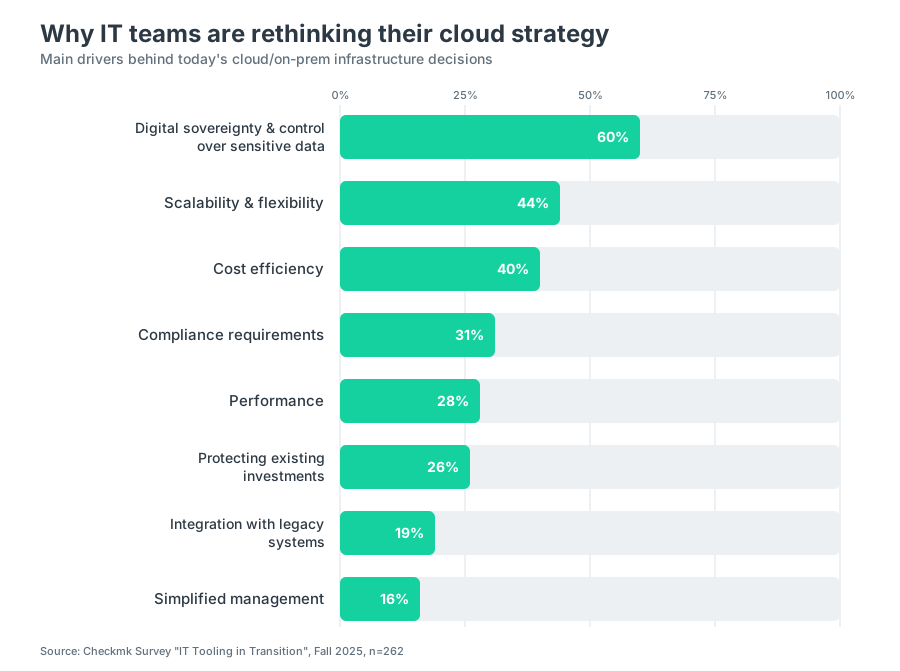
The leading reason is the desire for greater control over sensitive data and digital sovereignty (60%), followed by scalability and flexibility (44%), cost efficiency (40%), and regulatory compliance (31%). Rather than choosing between cloud and on-premises, organizations are increasingly combining both — based on security, operational requirements, and economics rather than ideology.
AI adoption is growing — strategy isn't
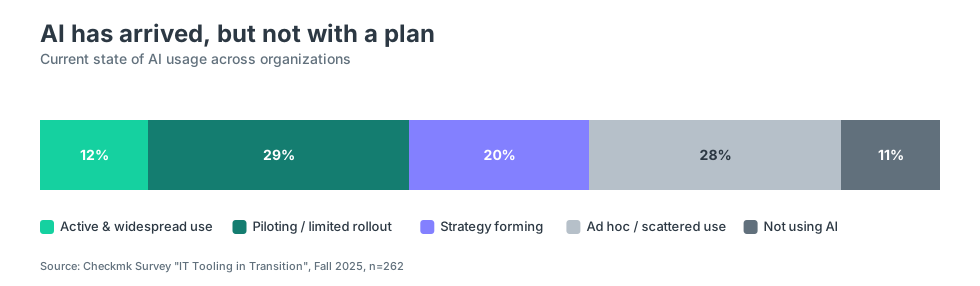
Nearly nine out of ten organizations (89%) now use AI in some capacity. But widespread, strategic adoption remains the exception rather than the rule. Only 12% say AI is already embedded across business processes. The rest are still experimenting through pilot projects (29%), developing an AI strategy (20%), or using AI on an ad hoc basis whenever a specific need arises (28%). Just 11% have yet to adopt AI at all.
Individual attitudes are generally more optimistic than organizational reality. More than half of respondents (51%) have a positive view of AI, while 17% remain neutral, 20% are skeptical, and 12% express serious concerns. In other words, IT professionals largely believe in AI's potential. Their organizations simply haven't caught up yet.
Trust remains the biggest obstacle
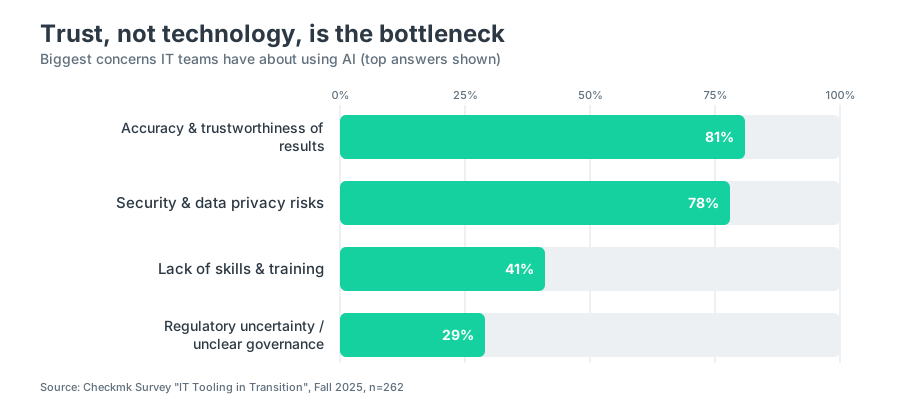
The reasons are straightforward. Accuracy and trustworthiness top the list of concerns by a wide margin (81%), followed closely by security and data privacy risks (78%). Skills gaps and insufficient training come next (41%), while regulatory uncertainty and unclear governance structures concern 29% of respondents.
The biggest obstacle to broader AI adoption isn't the technology itself. It's confidence in the results—and the organizational framework needed to use AI responsibly.
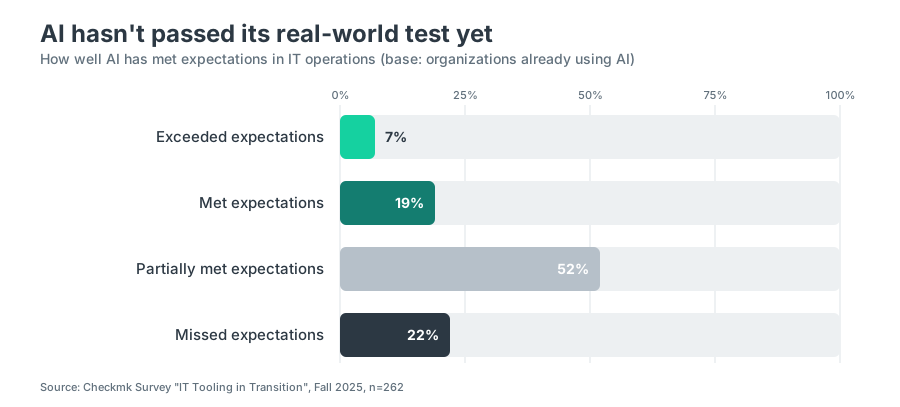
That hesitation is reflected in real-world experience. Only 26% of AI users say the technology has met or exceeded their expectations. Nearly as many (22%) say it has fallen short, while a majority (52%) report that AI has only partially delivered on its promises.
Today, AI is primarily an operational assistant rather than a strategic capability. Nearly two-thirds of respondents (63%) use generative AI tools such as ChatGPT for everyday tasks. Half rely on AI-assisted coding and scripting tools such as GitHub Copilot, while 27% use AI-powered support chatbots.
More advanced use cases—including autonomous monitoring and automated ticket handling—remain rare, with adoption hovering around 10%.
Monitoring is where AI can deliver the greatest value
Only about one in ten respondents currently use AI within their monitoring environment—a surprisingly low number considering that's exactly where they see its greatest potential. The reasons become obvious when looking at the challenges IT teams face every day.
Alert overload and the resulting alert fatigue are the biggest pain point, cited by 68% of respondents. Limited visibility across hybrid and multi-cloud environments ranks second at 58%.
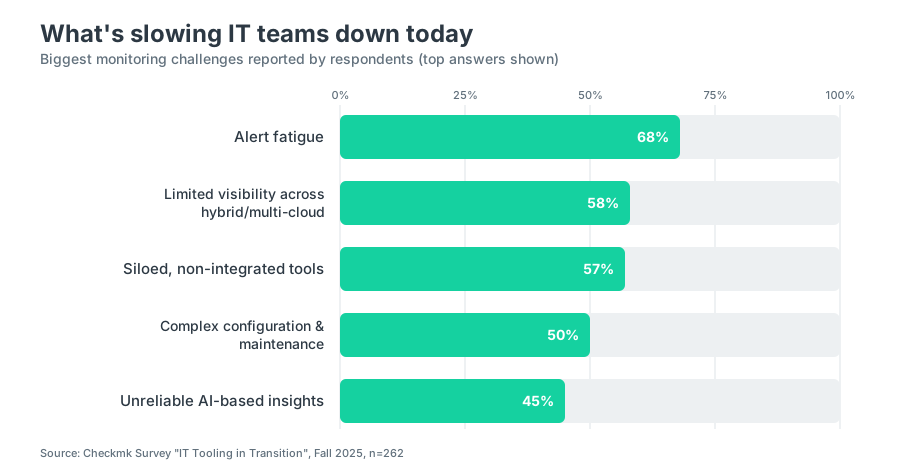
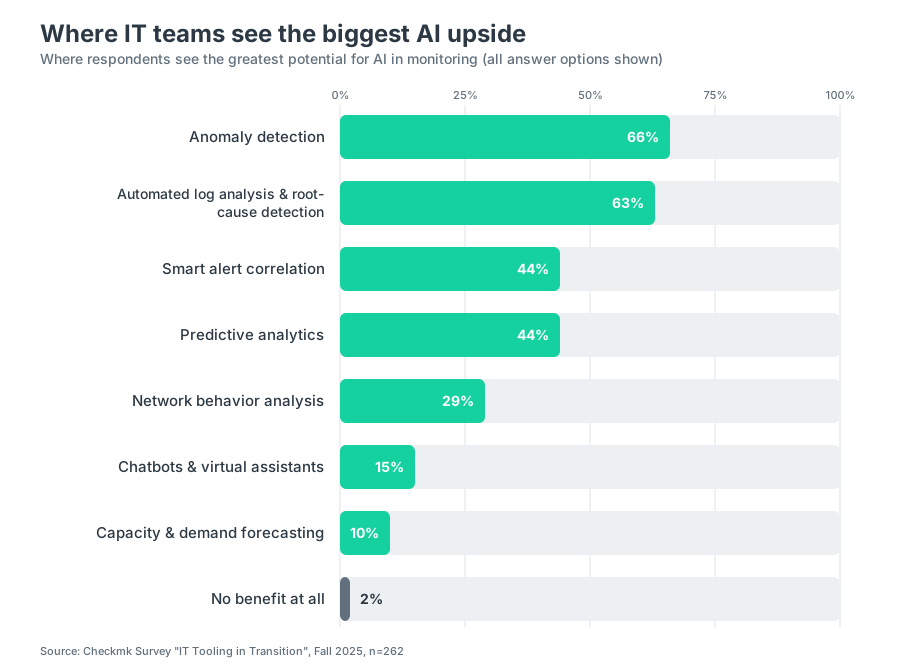
Not surprisingly, respondents believe AI can have the greatest impact where those challenges are most acute. Anomaly detection (66%) and automated log analysis with root cause identification (63%) top the list of AI use cases. By comparison, interest in AI-powered chatbots and virtual assistants (15%) or capacity forecasting (10%) is relatively low.
The message is clear: IT teams aren't looking for flashy AI features. They want practical tools that reduce operational noise, accelerate troubleshooting, and help them focus on what matters most. That perspective is reinforced by one final finding: only 2% of respondents believe AI has no value in monitoring at all.
Conclusion
AI is clearly more than another technology fad. Its rapid adoption across organizations demonstrates that. But the long-promised transformation of IT operations hasn't happened—at least not yet.
The limiting factor isn't AI itself. It's trust: trust in the accuracy of AI-generated insights, trust in governance, and trust that organizations can deploy AI responsibly.
Our survey also delivers another important takeaway. The fundamentals of IT haven't changed. Monitoring remains the foundation of modern IT operations, especially in increasingly hybrid environments. And it's precisely there that IT teams expect AI to make the biggest difference—not by replacing monitoring, but by making it smarter, faster, and more actionable.
Methodology
The findings are based on our IT Tooling in Transition survey, conducted in autumn 2025 among 262 IT professionals from more than 35 countries, with respondents primarily located in Germany, the United States, and other European markets.
Participants work predominantly in IT operations, DevOps, and IT leadership roles. More than two-thirds (68%) have at least ten years of professional experience.