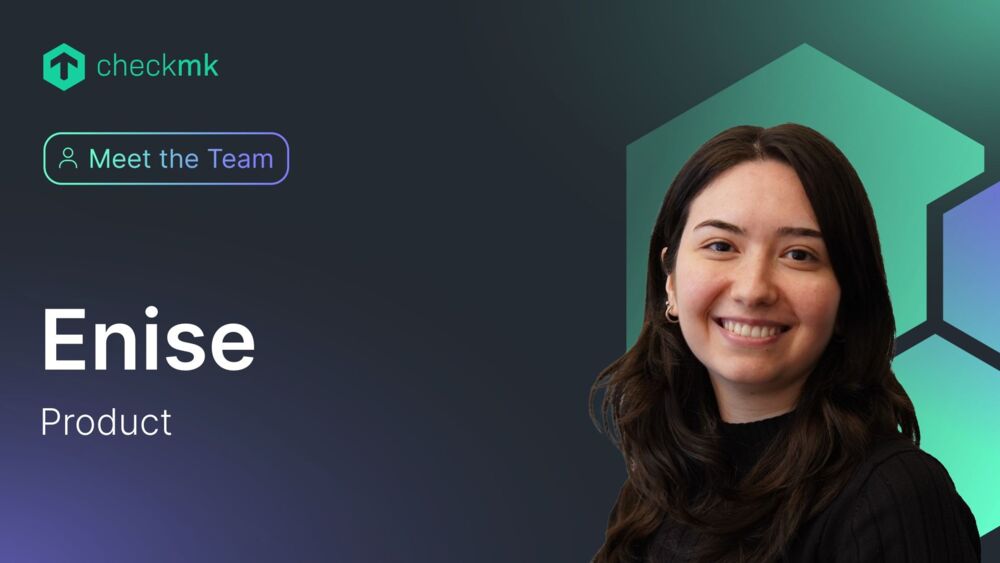
Enise Sahan
You started out studying Computer Engineering but quickly discovered your passion for user-centered design. How did that transition happen, and how does your engineering background help you today when working closely with our developers?
My journey into UX started somewhat unexpectedly during my Computer Engineering studies. I joined a startup as a software intern and found myself working on a product that was being built completely from scratch. In a small startup team, everyone wears multiple hats, so beyond development work, I also got involved in shaping the product’s user experience and interface since there wasn’t a dedicated UX Designer on the team.
That experience was actually my first introduction to UX/UI design, and it completely changed my perspective. I realized I was much more interested in how people experience and interact with products than how systems work behind the scenes. I found myself drawn to understanding user behaviors, simplifying complex experiences, and designing products that feel intuitive and visually engaging. The interest grew quickly, and I eventually decided to gain hands-on experience in the field after my graduation and deepen my knowledge by pursuing a Master's degree in the UX field, which helped me turn that initial curiosity into a profession.
Of course, at the same time, my technical background continues to be helpful in my work today. Even though the IT monitoring domain is much more technical and complex than what I studied at university, having that foundation helps me communicate more effectively with developers and better understand technical limitations, system logic, and what is realistically feasible to implement.
Before joining Checkmk, you designed features for Trendyol, an e-commerce app with over 30 million active users. How does designing for a massive consumer app compare to designing intuitive experiences for a highly technical B2B SaaS monitoring platform?
During my time at Trendyol, I experienced how fast-paced and dynamic the e-commerce world can be. When you’re designing for millions of users, there’s always something new to improve, test, or launch. It really taught me how important simplicity, speed, and smooth user flows are, especially because even small improvements can make a noticeable impact on both the user experience and business results.
What made the experience even more enjoyable was that I was also a user of the product in my daily life so it was much easier to relate to users, understand their expectations, and empathize with their needs.
Designing for a technical B2B IT monitoring platform, on the other hand, is a very different experience. The workflows are more complex, the users are highly specialized, and the problems you’re solving require a deeper understanding of users, systems and technical processes.
The focus is also different. Instead of designing quick and simple consumer actions, the goal is often to help users work through large amounts of data and complicated workflows in a way that feels clear and manageable. You’re frequently designing data-heavy interfaces, detailed forms, and workflows with complex logic, which makes the work both challenging and very rewarding from a UX perspective.
What connects both experiences for me is the core mindset behind UX design: understanding users, identifying pain points, and creating solutions that genuinely help people. Even though the products and user groups are very different, empathy, research, and problem-solving are always at the center of the process.
As a UI/UX Designer at Checkmk, you're involved in everything from user research to building out the Design System. What does a typical workday look like for you, and which design tools are absolutely essential to your workflow?
I usually start my day by planning and organizing my tasks based on my priorities and meeting schedule. After that, I join the daily stand-up with the development team I’m assigned to. At Checkmk, UX designers work closely with dedicated development teams, so we’re responsible for all UX-related aspects of the projects those teams are working on. During the daily meetings, we share updates on our UX tasks, discuss ongoing work, and ask for clarification or support when needed.
The rest of the day is usually a mix of design work and collaboration. We often have meetings in the mornings so I’d say my afternoons are usually my main focus time, where I can really concentrate and be most productive with my design tasks.
In terms of tools, Figma is definitely at the center of my daily workflow for creating and sharing design ideas. Recently, tools like Gemini and Claude have also become helpful companions in my process.
I also work closely with our UI component library and design system documentation, since they’re essential for maintaining consistency across our designs and making collaboration smoother with development teams. For day-to-day communication, we use Slack across the company. We also use Jira to manage and track tasks, tickets, and project progress.
And of course, I actively use Checkmk itself as part of my daily workflow as well, whether it’s checking the production environment, reviewing the current state of features, or comparing old and new experiences to better evaluate design decisions and improvements.
Lastly, on a more personal note, Spotify is usually running in the background while I work :)
You lead the creation and management of the Checkmk Design System over the past year. Can you explain why a strong design system is so crucial for a growing software product, and how it impacts both the user experience and developer efficiency?
A strong design system becomes more important as a product grows because it creates consistency across the entire experience, both for users and for internal teams.
Starting from the user perspective, consistency builds trust. When buttons, forms, navigation patterns, spacing, colors, and interactions behave the same way across the product, users don’t need to relearn the interface every time they move to a new feature. Especially in our growing software product where we continuously improve existing flows and introduce completely new features, maintaining consistency helps the experience feel smoother, more intuitive, and more reliable every time users interact with our work.
From a team perspective, a design system helps both us and developers work much more efficiently. Instead of solving the same UI challenges repeatedly, we can rely on shared components and clear guidelines. This allows us to focus more on solving real user problems and product thinking rather than recreating screens from scratch, while developers can build faster using reusable coded components.
It also strengthens our collaboration with developers because everyone is working with the same shared language. When components and documentation are aligned, handoff becomes clearer, communication is smoother, and implementation is much more accurate.
Another key benefit is scalability. As the product grows and more teams contribute to it, maintaining quality and consistency becomes very difficult without a structured system in place. Honestly, this can already become challenging even within the UX team itself. If everything only lives in individual design files, it quickly becomes difficult to share knowledge, maintain visibility, and keep everyone aligned. A design system creates this governance and structure needed to keep the product cohesive, even while projects are evolving quickly.
And recently, with the rapid growth of AI-powered design tools, I think design systems have become even more important. The quality and consistency of your design system directly influence the quality of the results you get from these tools. When your components, patterns, and documentation are well-structured, AI can work much more effectively and generate outputs that are aligned with your product standards.
In my experience, a strong design system is much more than just a UI library. It's a shared foundation that supports product quality, team efficiency, collaboration, scalability, and increasingly, the future of AI-assisted design.
You are very passionate about accessibility, inclusivity, and mental health in the tech space – topics you also highlighted after attending UXcamp Europe. How do you integrate these values into your daily design decisions to ensure our software is accessible to everyone?
Accessibility, inclusivity, and mental health have always been topics I genuinely care about, both personally and professionally. They’ve been areas I’ve continuously wanted to learn more about and improve myself in. I even explored accessibility as part of my Master’s thesis, mainly out of personal curiosity and interest in creating more inclusive experiences.
In my daily design work, I try to approach accessibility as a natural part of the design process from the very beginning, rather than something to check later at the end. When I’m designing a new feature or component, I actively think about things like color contrast, touch target sizes, different states, readability, and how intuitive the experience feels for different types of users.
I also try to put myself into different user perspectives as much as possible. For example, I use tools and Figma plugins that simulate experiences such as color blindness or low vision to better evaluate how accessible and usable my designs are.
What I really appreciate at Checkmk is that this mindset is strongly supported across the whole product development process. Accessibility is something we openly discuss and collaborate on as designers, developers, and QA engineers together. That shared responsibility makes it much easier to keep accessibility consistently part of our decisions instead of treating it as a separate task.
What do you think makes Checkmk or your team in particular special?
One of the things I love most is how user research-driven the culture is. There’s a strong mindset across the company around truly understanding our users and the problems they face. We try to support our decisions with real user feedback and data as much as possible, which makes the design process much more meaningful and grounded.
Another thing I really value is, as I mentioned in the previous question, how accessibility is always considered as part of our design decisions and process.
From the UX team perspective, I also really love how collaborative and supportive we are with each other. Everyone is very open to sharing feedback, discussing ideas, and helping one another improve. We have a really strong communication culture within the team, and that makes working together both productive and enjoyable :)
Do you remember a particularly interesting, exciting or beautiful experience you had at Checkmk? If so, can you tell us about it?
Conference time at Checkmk is honestly my favorite part of the year. The atmosphere is always amazing. It’s a great opportunity to interact directly with our customers, hear their feedback, and see how people are actually experiencing the work we’ve been building throughout the year.
There’s also something really rewarding about seeing the features and projects you worked on presented on the big screen and hearing users and colleagues react to them. Listening to the talks, achievements, and the stories behind the work makes you realize how much effort and collaboration goes into everything we build.
And beyond the work itself, the social side of the conference is also really special - spending time with colleagues and customers during the evening event, celebrating the new version together, and simply enjoying the experience. Overall, it has a very unique and motivating experience.
How did you come to Checkmk? What made you decide to join?
After completing my Master’s degree, I was looking for a role where I could both challenge myself and genuinely enjoy the work I was doing. Around that time, I attended the Usability Day event in Augsburg to give a presentation about my Master’s thesis. That’s also where I met Tanja, our Head of UX.
She was there as a speaker as well, and at the end of her talk she mentioned that her company was looking for a UX Designer. The opportunity immediately caught my attention. After the event, I spent some time researching Checkmk and learning more about the product and the industry. Since IT monitoring was a completely new area for me, I found the challenge and learning opportunity really exciting.
I reached out to Tanja afterwards to express my interest, and from there I was invited to interview for the role. During the hiring process, I also had the chance to learn more about the company culture, the way teams collaborate, and the overall working environment. What impressed me most was how user-centered and research-driven Checkmk is, while still maintaining a very collaborative, friendly, and supportive culture.
By the end of the process, I felt that it would be a place where I could both grow professionally and enjoy working with the people around me, which made me decide to join Checkmk at the end :)